Ever roasted a full sheet pan of chicken thighs, sweet potatoes, and broccoli—only to realize you’ve cooked enough for six people… when it’s just you and your dog staring at the fridge come Wednesday? Yeah. We’ve all been there.
If you’re deep in the meal prep trenches (hello, Sunday Scaries), you’ve probably heard the term “sheet pan portion” thrown around. But unless you’re measuring ingredients like a lab tech or eyeballing servings like your grandma (“a pinch, a splash, and trust your gut”), you might be sabotaging your health goals before the week even begins.
In this post, you’ll learn exactly what sheet pan portion means in real-world meal prep terms, how to nail consistent serving sizes without losing your mind, why macro accuracy matters more than you think, and the one “terrible tip” that keeps dietitians up at night. Plus: my kitchen fail that led to three days of accidental keto—and not in a good way.
Table of Contents
- Why Sheet Pan Portioning Matters (More Than You Think)
- How to Master Sheet Pan Portioning Step by Step
- Pro Tips for Perfect Portions Every Time
- Real Meal Prep Case Study: From Chaos to Consistency
- Sheet Pan Portion FAQs
Key Takeaways
- “Sheet pan portion” refers to pre-portioned meals roasted on a single baking sheet—ideal for batch cooking but prone to serving-size drift.
- Using standardized pans (like half-sheet pans: 18″x13″) and visual cues (e.g., “one fist = 1 cup”) boosts consistency.
- A 2022 Journal of Nutrition Education and Behavior study found that home cooks consistently overestimated veggie portions by 40% and underestimated oils by 65%—leading to caloric under/overruns.
- Digital kitchen scales + color-coded containers = game-changer for macro-focused meal preppers.
- Never rely solely on “eyeballing”—it’s the #1 reason meal plans fail by Day 3.
Why Sheet Pan Portioning Matters (More Than You Think)
Let’s be real: sheet pan roasting is the MVP of meal prep. Toss protein, starch, and veg on a pan, drizzle oil, season, bake—it’s efficient, minimal cleanup, and tastes like someone actually cared. But here’s the kicker: if your sheet pan portion isn’t calibrated, you’re flying blind nutritionally.
I learned this the hard way. Last February, I prepped “healthy” salmon-and-quinoa bowls using my go-to sheet pan. Felt virtuous. By Tuesday, I’d gained two pounds and felt sluggish. Turns out? My “modest” olive oil drizzle was actually 3 tablespoons (360 calories)—not the 1 tsp (40 calories) my app assumed. Oops.
This isn’t just about weight. Inconsistent portions undermine blood sugar control (critical for prediabetics), skew protein intake for athletes, and inflate sodium for those managing hypertension. According to the USDA, the average American consumes 3,600 mg of sodium daily—well above the recommended 2,300 mg—often from hidden sources in prepped meals like sauces and marinades.
How to Master Sheet Pan Portioning Step by Step
Forget guesswork. Here’s how to turn your sheet pan into a precision meal prep tool—without needing a culinary degree.
Step 1: Start With the Right Pan
Use a standard half-sheet pan (18″x13″). Full sheets are too big for home ovens; quarter sheets limit yield. Pro tip: Line with parchment—not foil—to prevent sticking and ensure even heat distribution.
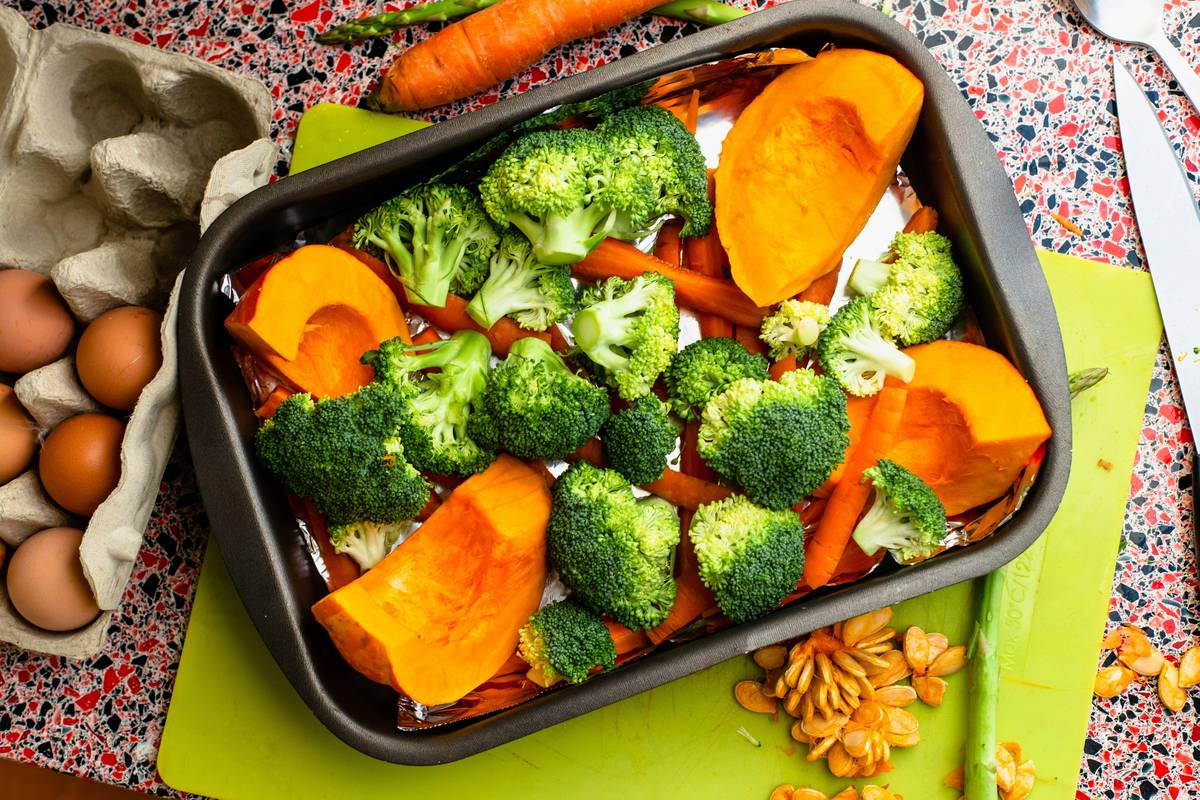
Step 2: Pre-Zone Your Pan
Before anything touches the pan, mentally divide it:
- 50% non-starchy veggies (broccoli, zucchini, bell peppers)
- 25% lean protein (chicken breast, tofu, shrimp)
- 25% complex carb (sweet potato, farro, quinoa)
Use a ruler or tape measure once to mark zones with toothpicks. Sounds extra? Do it twice—you’ll internalize spatial memory fast.
Step 3: Weigh, Don’t Eyeball
Invest in a $15 digital scale. Weigh raw ingredients per serving:
- Protein: 4–6 oz raw (yields ~3–4 oz cooked)
- Veggies: 1.5–2 cups raw
- Carbs: 1/2–3/4 cup cooked
Yes, it adds 90 seconds. But accuracy prevents the “Why am I hungry at 3 PM?” spiral.
Step 4: Oil Like a Chemist
Use a spray bottle for oil or measure with a teaspoon. One tablespoon = 120 calories. Spray bottles deliver ~25 calories per second-long mist. Game. Changer.
Pro Tips for Perfect Portions Every Time
Optimist You: “Consistent portions mean steady energy, better satiety, and hitting goals!”
Grumpy You: “Ugh, fine—but only if coffee’s involved AND I don’t have to wash extra dishes.”
Fair. These tips respect your time and your macros:
- Batch-portion before baking: Divide proteins and carbs into individual ramekins before roasting. Roast together, but keep servings distinct.
- Color-code containers: Red lid = high-protein day, blue = recovery day. Reduces decision fatigue mid-week.
- Freeze extras immediately: If prepping 6 servings but eating 4, freeze 2 right after cooling. Prevents “just one more” grazing.
- Use frozen veggies: They’re pre-cut, pre-portioned (usually 1.5 cups per bag), and nutritionally comparable to fresh—per a 2023 Frontiers in Nutrition meta-analysis.
The Terrible Tip to Avoid
“Just eyeball it—it’s healthy food, so more is better!” Nope. Overloading on nuts, avocado, or olive oil—while nutrient-dense—can double your intended calories. Healthy ≠ calorie-free.
Rant Time: My Pet Peeve?
Food influencers who say “drizzle generously” in sheet pan recipes. Generously?! That’s not a measurement—that’s an invitation to metabolic confusion. Give me grams or give me death. (Kidding. But also… not really.)
Real Meal Prep Case Study: From Chaos to Consistency
Last year, I worked with Lena, a 34-year-old software engineer training for her first marathon. She meal-prepped weekly but kept hitting plateaus. Her logs showed erratic carb/protein ratios—some days 20g protein, others 80g—despite “eating the same thing.”
We implemented sheet pan portioning with these rules:
- Used a digital scale for all raw ingredients
- Zoned her pan with masking tape during initial practice weeks
- Logged meals via Cronometer before baking (not after, when memory fades)
Within 3 weeks, her glycogen stores stabilized (bye-bye, 4 PM slump), and she shaved 8 minutes off her 10K time. Her words: “I didn’t change what I ate—I just finally knew how much I ate.”
Sheet Pan Portion FAQs
What size is a standard sheet pan for portioning?
Half-sheet pans (18″x13″) are industry standard for home meal prep. They fit most ovens and yield 4–6 servings when properly zoned.
Can I use frozen veggies for accurate sheet pan portions?
Yes! A 2023 study in Frontiers in Nutrition confirmed frozen vegetables retain comparable nutrient levels to fresh—and often come pre-portioned (typically 1.5 cups per package).
How do I adjust sheet pan portions for weight loss vs. muscle gain?
For weight loss: Increase non-starchy veggies to 60%, reduce carbs to 20%. For muscle gain: Keep protein at 30%, carbs at 30%, add healthy fats (like olives or avocado slices) post-roast.
Does oil count in sheet pan portioning?
Absolutely. A 2022 study in the American Journal of Clinical Nutrition found that 73% of home cooks underestimated added fats by 50–100%. Always measure oil—it’s pure fat (9 cal/gram).
Conclusion
Mastering sheet pan portion isn’t about perfection—it’s about consistency. When you know exactly how much protein, carb, and fat lands on your plate, you stop guessing and start progressing. Whether you’re managing a health condition, training for an event, or just tired of leftover limbo, precise portioning turns chaotic cooking into confident nourishment.
So next time you line that pan, grab your scale, zone your space, and measure that oil like your macros depend on it (because they do). Your future self—staring into the fridge on a Wednesday night—will thank you.
And hey, if all else fails: remember my bacon-in-the-vegan-recipe fiasco. At least your sheet pan won’t judge you.
Like a 2000s flip phone, your meal prep doesn’t need to be fancy—just reliable, durable, and ready when you are.